How to Prepare Your Car for Auto Transport: A Step-by-Step Checklist
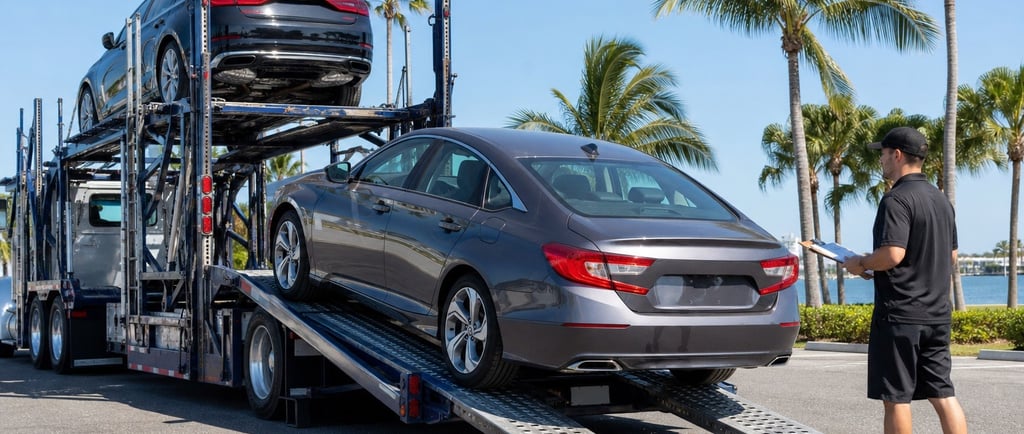
Shipping a vehicle — whether across the state or across the country — is a straightforward process when you know what to expect. But a little preparation on your end makes a big difference in ensuring your car arrives safely and on time.
At Direct Logistics, we transport vehicles throughout Florida and nationwide every day. Here's the step-by-step checklist we give every customer before pickup.
1. Wash Your Vehicle
This might seem unnecessary, but it's one of the most important steps. A clean car makes it easy to document the condition of your vehicle before it goes on the carrier.
Wash the exterior thoroughly
Clean the wheels and wheel wells
A clean surface makes scratches, dents, and chips easy to spot during the pre-transport inspection
This protects both you and the carrier by establishing a clear baseline condition.
2. Document Your Car's Current Condition
Before the driver arrives, take detailed photos and video of your vehicle from every angle:
All four sides — front, back, driver side, passenger side
All four corners — where door dings and bumper damage typically occur
Roof and hood — especially if you have a dark-colored car where scratches show
Wheels and tires — note any curb rash or existing damage
Interior — dashboard, seats, and any existing wear
Take these photos with timestamps. This documentation is your proof of condition at pickup — and it's your best protection if there's ever a dispute about damage during transport.
3. Remove Personal Belongings
Auto transport carriers are licensed to transport vehicles — not household goods. Most carriers have strict policies:
Remove all personal items from the interior and trunk
Items left in the car are typically not covered by the carrier's insurance
Loose items can shift during transport and damage the interior
Extra weight can affect the carrier's load limits
A few small, secured items in the trunk are usually fine, but check with your transport company first. Anything valuable, fragile, or irreplaceable should go with you.
4. Check Fluid Levels and Tire Pressure
Your car needs to be drivable — the driver will need to load and unload it from the carrier:
Tire pressure — all four tires should be properly inflated
Battery — fully charged and in good condition
Fuel level — keep the tank at about 1/4 full. A full tank adds unnecessary weight; an empty tank may not be enough to drive on and off the carrier.
Fluids — check for any active leaks (oil, coolant, transmission). Leaking vehicles may be refused by carriers because they can damage other vehicles on the trailer.
If your car has any mechanical issues that affect its ability to start or drive short distances, let your transport company know in advance. Inoperable vehicles require special equipment and may cost more.
5. Disable or Note Alarms and Anti-Theft Systems
Nothing delays a transport more than a car alarm going off on a carrier in the middle of a highway.
Disable aftermarket alarms or provide clear instructions for the driver
Deactivate any motion-sensitive security systems
Leave a spare key fob if the alarm can only be silenced with one
Note any special starting procedures
6. Secure or Remove Exterior Accessories
Anything that sticks out or could come loose during transport should be removed or secured:
Antennas — retract or remove
Spoilers or wings — make sure they're firmly attached
Bike racks, roof racks, cargo carriers — remove completely
Custom mirrors or tow hooks — remove if they extend beyond the vehicle's profile
Convertible tops — secure in the closed (up) position
Tonneau covers on trucks — secure firmly or remove
The carrier isn't responsible for damage to loosely attached or aftermarket accessories.
7. Handle Toll Transponders
If you have a SunPass, E-Pass, or any electronic toll transponder:
Remove it from the windshield or place it in the provided Mylar bag
The carrier will pass through toll plazas, and you don't want to be charged for tolls during transport
This is one of the most commonly forgotten steps — and it can add up fast on a long-distance transport.
8. Leave Only One Set of Keys
Provide the driver with one set of keys at pickup. Keep your spare set with you.
The driver needs the keys to load, secure, and unload the vehicle
Keys will be returned to you or the receiving party at delivery
Make sure the key you provide starts the car and opens all locks
9. Do a Final Walkthrough with the Driver
When the carrier arrives for pickup:
Walk around the vehicle together with the driver
Review the Bill of Lading (BOL) — this is the condition report that documents every existing scratch, dent, and ding
Make sure every piece of existing damage is noted — if it's not on the BOL, it will be hard to prove it was there before transport
Take your own photos at the same time for your records
Sign the BOL only after you've reviewed it carefully
Do this same process at delivery. Compare the vehicle's condition to the pickup BOL and your photos.
10. Confirm Pickup and Delivery Details
Before pickup day, make sure everything is confirmed:
Pickup address and contact info — is the location accessible for a large carrier truck?
Delivery address and contact info — same consideration for the destination
Dates and windows — transport schedules typically have a pickup window (1–3 days) rather than an exact time
Contact numbers — make sure the driver can reach you or your designated contact at both ends
If the carrier can't access your location (narrow streets, low-hanging trees, gated communities), you may need to arrange a nearby meeting point.
Quick-Reference Checklist
✅ Wash the vehicle
✅ Take timestamped photos/video from every angle
✅ Remove all personal belongings
✅ Check tire pressure and battery
✅ Keep fuel tank at 1/4 full
✅ Fix or disclose any leaks
✅ Disable car alarms
✅ Remove or secure exterior accessories
✅ Remove toll transponder
✅ Provide one set of keys
✅ Review and sign the Bill of Lading carefully
✅ Confirm pickup/delivery addresses and contacts
Ready to Ship Your Vehicle?
Preparing your car takes about 30 minutes and makes the entire transport process smoother, faster, and safer. At Direct Logistics, we walk every customer through the process and make sure there are no surprises.
👉 Contact Direct Logistics today to get a free auto transport quote. We handle vehicle shipping throughout Florida and nationwide — with honest pricing, clear communication, and careful handling every step of the way.
Direct Logistics provides professional auto transport services for individuals and businesses across Florida and the United States. Reliable, insured, and always transparent.
Contact
Reliable Nationwide Auto Transport — Simple, Safe, and On Time.
Phone
info@directlogistics.group
(561) 407-0834
Direct Logistics Group, MC-1085726, is a service division of Direct Inc Group.